


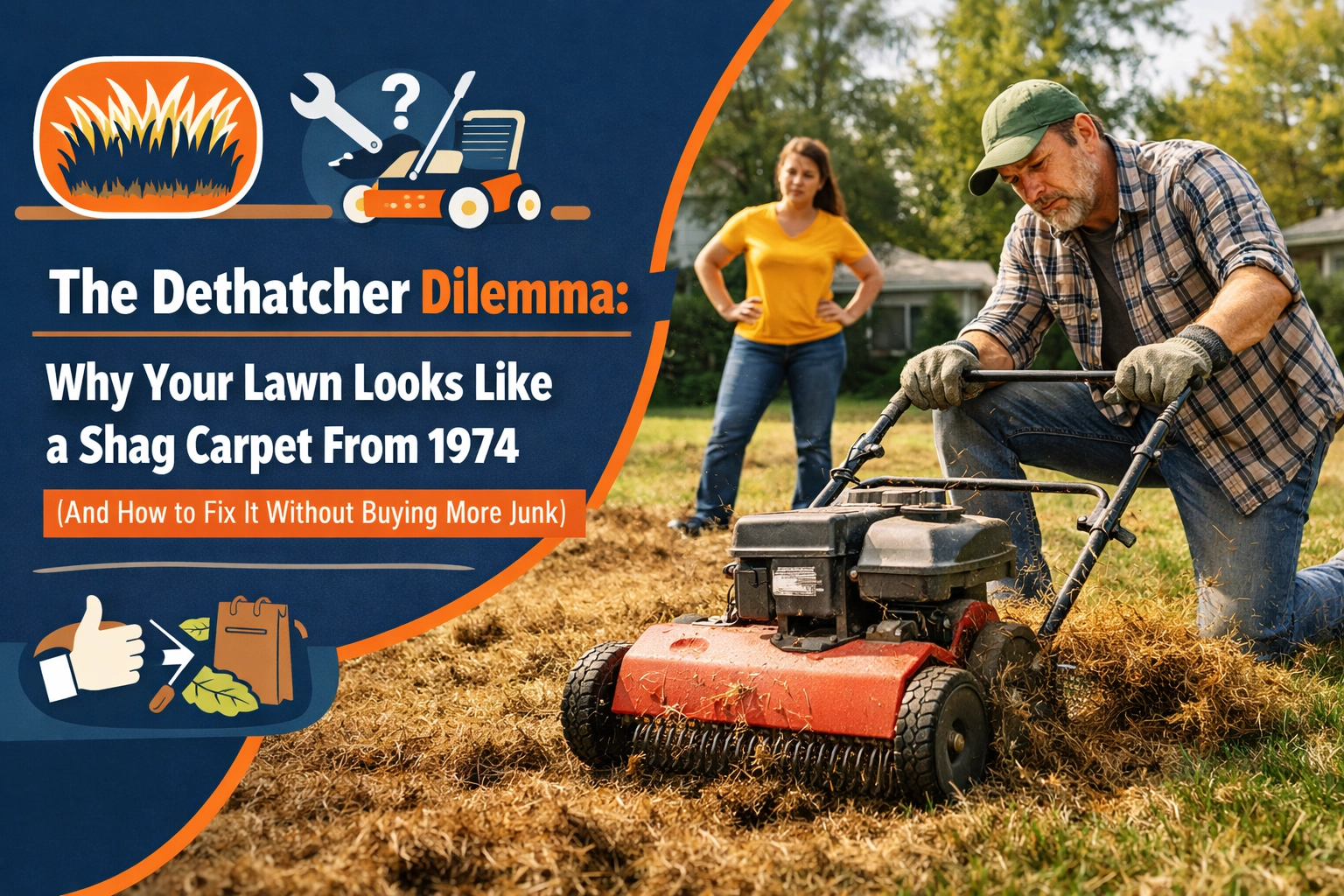
Take a good, hard look at your front yard. If you’re living in Woburn, Burlington, or anywhere else in our neck of the woods, there’s a high probability your lawn is currently auditioning for a role in a grainy 1970s documentary about suburban décor. It’s thick, it’s spongy, and it has that distinct “shag carpet” vibe: the kind that probably hides a few lost Lincoln Logs and a layer of mystery from the Ford administration.
While that look might have been peak fashion when bell-bottoms were in their first iteration, it’s a death sentence for your grass in 2026. This, my friends, is the Dethatcher Dilemma. It’s that awkward moment when you realize your lawn is basically wearing a heavy wool sweater in the middle of a humid Massachusetts July, and it’s desperately gasping for air.
At Chartrflex, we’re all about community, sustainability, and: most importantly: not owning stuff we only use twice a year. So, let’s talk about why your lawn looks like a disaster, why you shouldn't buy a machine to fix it, and how we can solve this together without turning your garage into a graveyard for expensive, dusty machinery.
What Is This "Thatch" and Why Is It Ruining My Life?
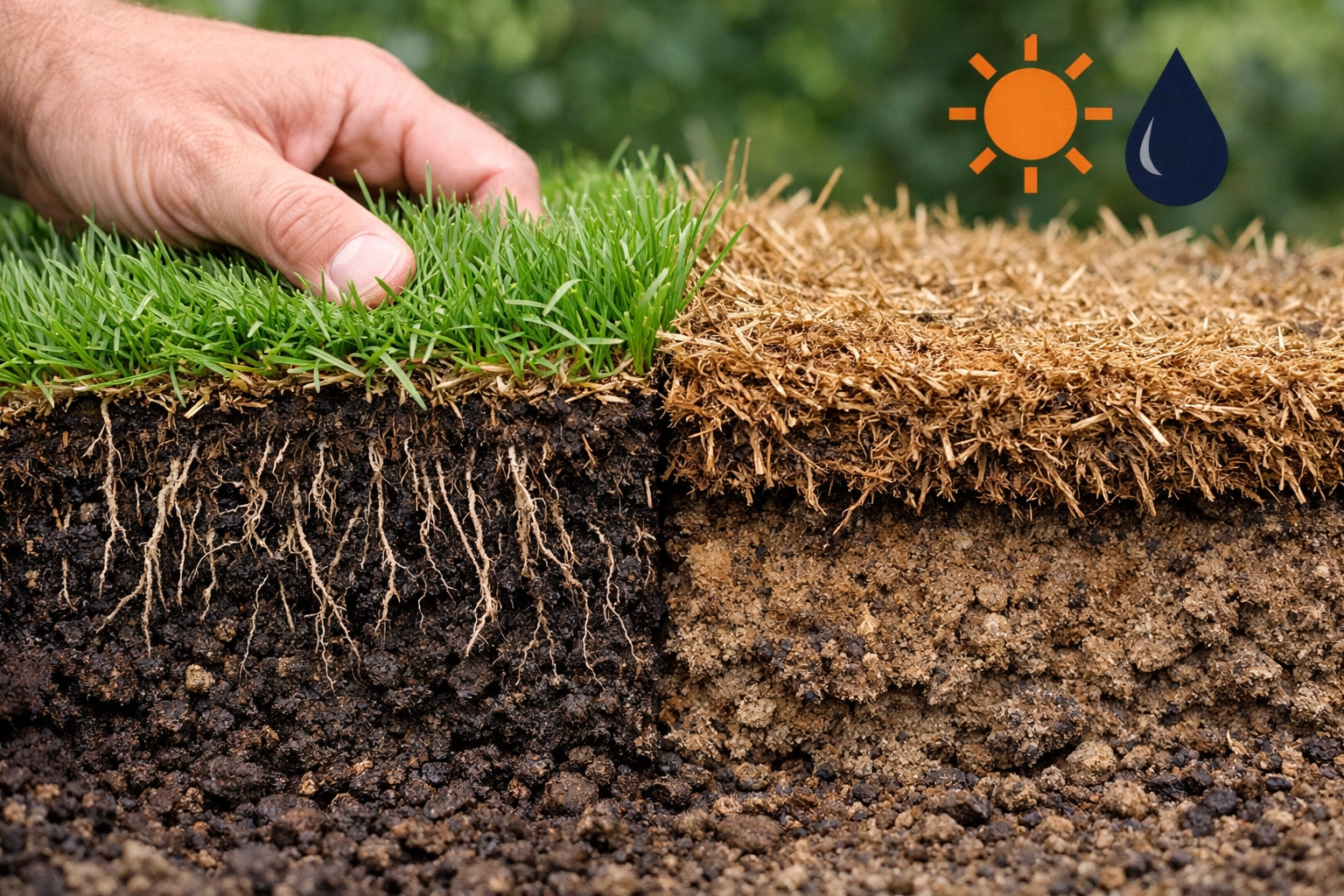
Before we get into the heavy machinery, let’s talk science (but the fun kind). Thatch is a layer of dead grass, roots, and organic debris that builds up between the soil and the green blades you actually want to see. A little bit of thatch is fine; it’s like a light moisturizer for your yard. But once it exceeds about half an inch, it becomes a problem.
It starts acting like a waterproof tarp. Water, air, and nutrients can’t get down to the roots. Instead, they just sit on top, inviting pests and diseases to set up shop. If your lawn feels "squishy" when you walk on it, or if it looks brown despite you dumping half the Mystic River on it with your sprinkler, you’ve got a thatch problem.
The "Thatch Anxiety" of Woburn and Wakefield
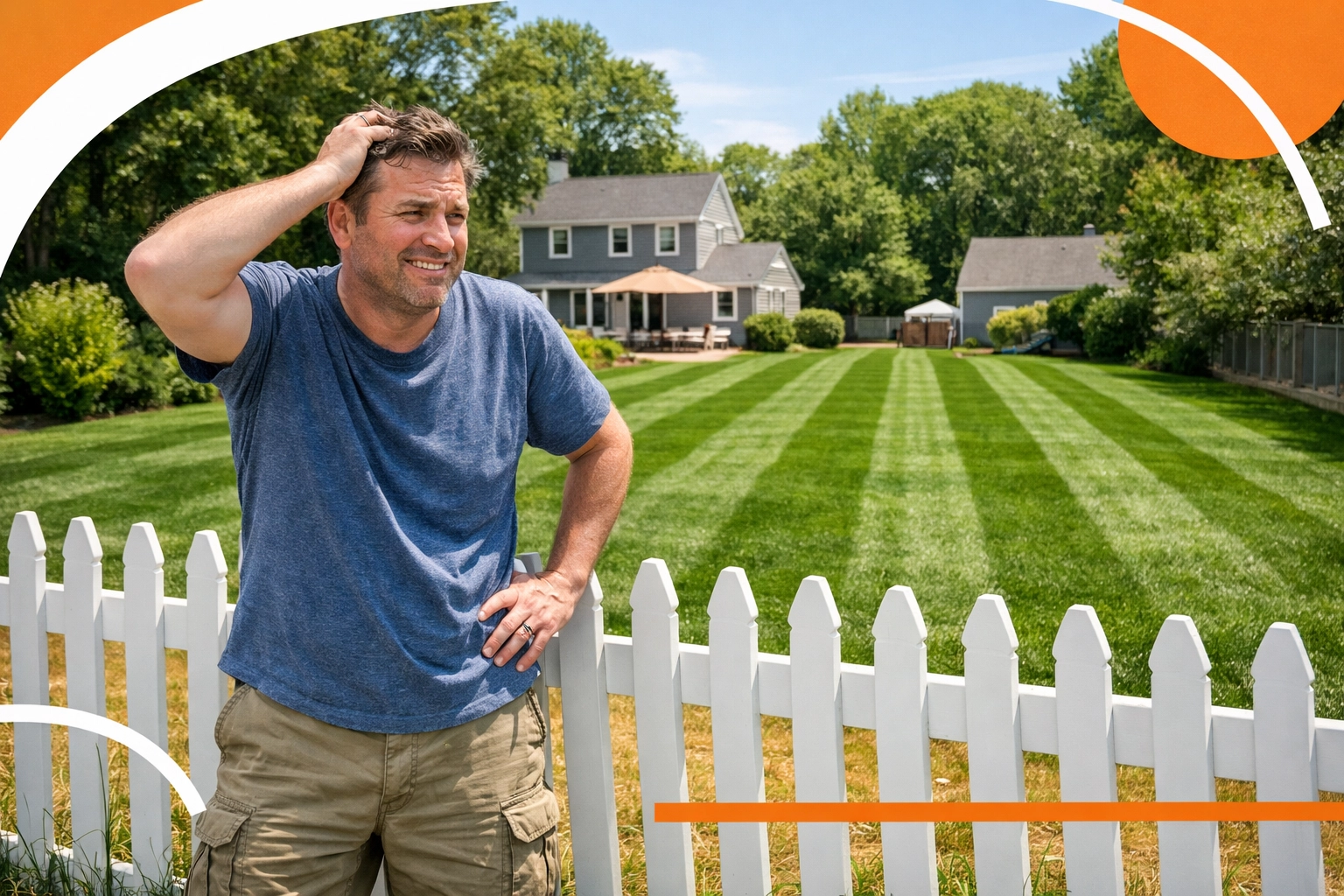
If you’ve spent any time driving through the neighborhoods of Woburn or Wakefield lately, you’ll notice a certain tension in the air. It’s "Thatch Anxiety." It’s that peculiar suburban phenomenon where you look at your neighbor’s perfectly manicured, golf-course-ready lawn and then look at your own "1974 shag carpet" and feel a deep sense of horticultural shame.
You know the neighbor I’m talking about. They’re out there at 7:00 AM on a Saturday, looking pristine. Meanwhile, you’re trying to figure out if you can just mow the thatch away. (Spoiler: You can’t. You’ll just make it angry.)
Enter: The Miniature Combine Harvester
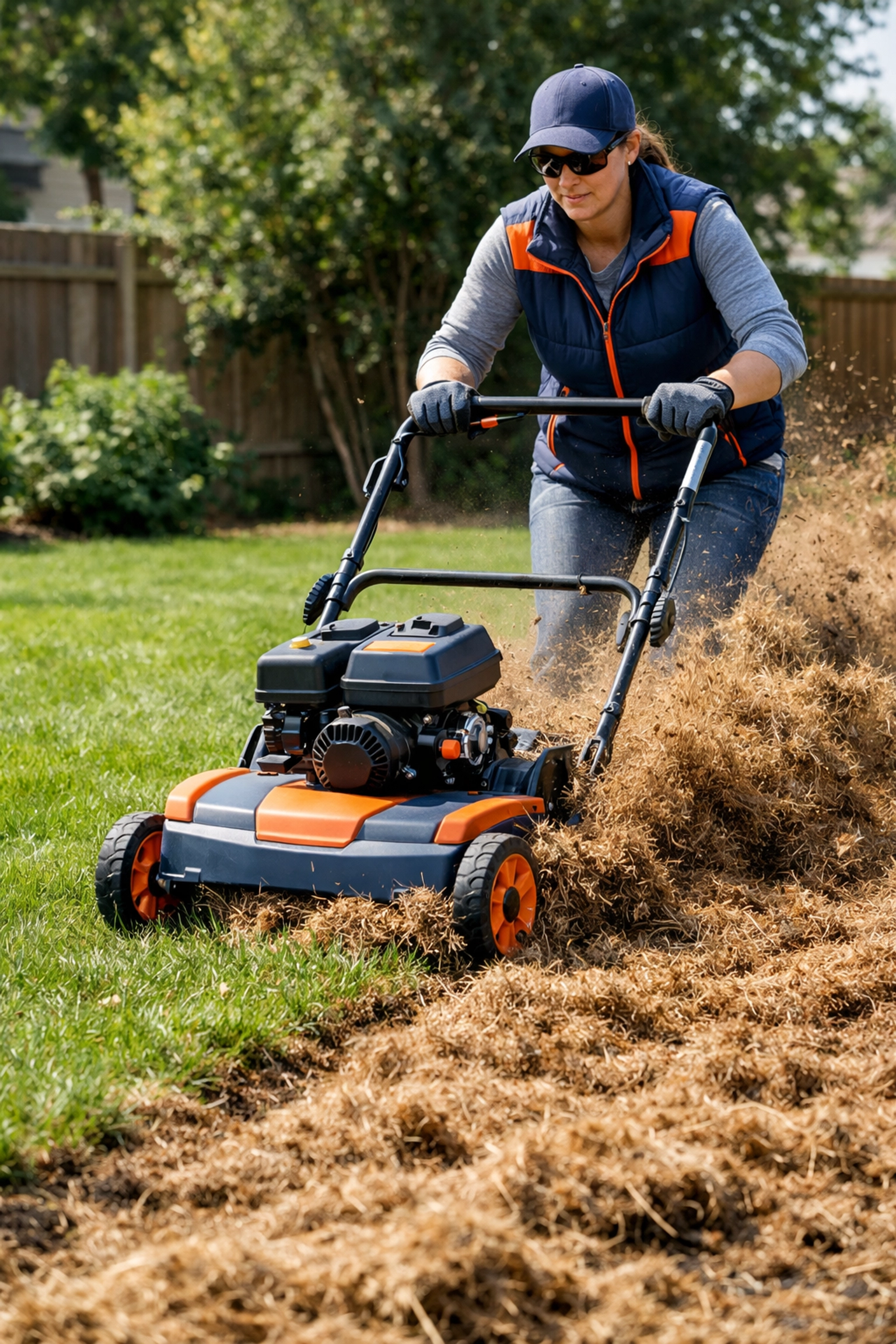
To fix this, you need a dethatcher. If you’ve never seen one, imagine a miniature combine harvester had a baby with a very aggressive lawnmower. It features vertical tines that reach down into the "carpet" and rip out the dead gunk.
When you first use one, it is terrifying. Your lawn will go from "slightly messy" to "looks like a herd of confused bison just stampeded through a hay factory." You will have piles: absolute mountain ranges: of dead brown fluff everywhere. But this "disaster zone" phase is the only way to get to that lush, green paradise we all want for our summer BBQs.
The Reading Rake-Off: A Cautionary Tale
Now, some of you "old school" types in Reading might be thinking, “Josiah, I’ll just get a dethatching rake and do it by hand. It’s good exercise!”
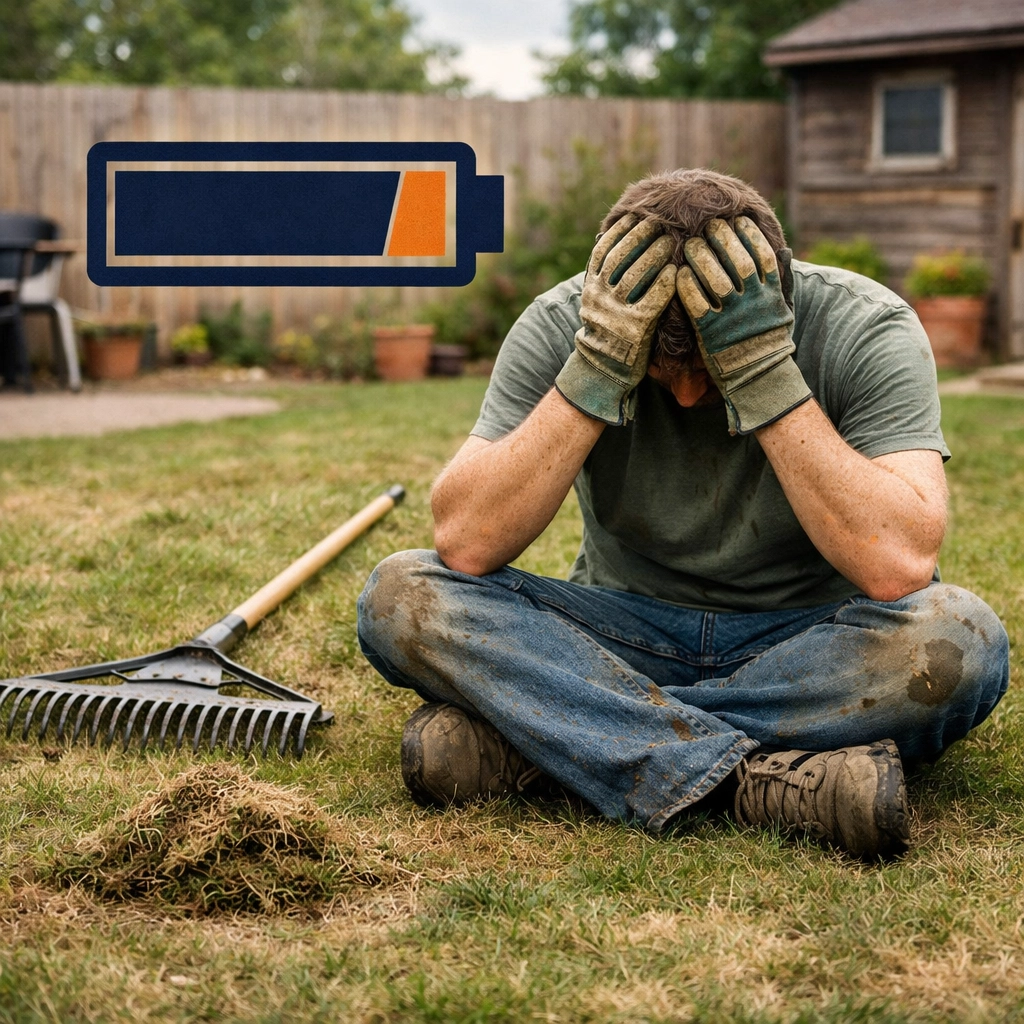
Let me stop you right there. We call this the "Reading Rake-Off," and it is the fastest way to earn yourself a set of blisters that would make a marathon runner weep. Unless your lawn is the size of a postage stamp, trying to manually dethatch is a Herculean task that ends in back pain and regret. You’ll spend four hours doing ten square feet, look at the remaining 4,000 square feet, and promptly go inside to lie down in a dark room.
The Economics of the 363-Day Paperweight
Here is the crux of the Dethatcher Dilemma: A decent power dethatcher is going to cost you anywhere from $200 to $600. And how often do you use it? Exactly twice a year. Maybe once if you’re lazy (no judgment).
That means for 363 days a year, you are effectively paying rent for a machine that does nothing but take up valuable real estate in your garage. It’s a high-maintenance guest that never leaves and never helps with the dishes. It’s the ultimate "junk" purchase.
In a world where we’re trying to be more sustainable and conscious of our consumption, buying a specialized tool like this is just… weird. Why own the hole when you just need the bolt? Why own the harvester when you just want the lawn?
The Chartrflex Way: Community Trust over Consumerism
This is exactly why we built Chartrflex. We believe that your neighborhood is essentially one giant, decentralized hardware store. Somewhere in Burlington, someone has a dethatcher sitting in their garage right now, bored and lonely. Somewhere in Wakefield, someone needs that tool for four hours.
By using Chartrflex, you aren’t just saving money (though, let’s be honest, saving $400 is a pretty great feeling). You’re participating in a sharing economy that prioritizes:
- Sustainability: We don't need 500 dethatchers in one zip code. We need five that work hard and stay busy.
- Community Connection: Meeting your neighbor to pick up a tool is a lost art. It builds trust and makes our towns feel like actual communities again.
- Local Economy: That rental fee doesn't go to a massive corporation; it goes to your neighbor to help fund their summer BBQ supply run.
How to Fix Your Lawn (The Smart Way)
If you’re ready to kill the 1974 shag carpet vibe, here’s the game plan:
- Check the Depth: Take a small wedge of turf out. If the brown stuff is thicker than half an inch, it’s time.
- Timing is Everything: Do this when the grass is actively growing. For us in the Northeast, that means early fall or late spring.
- Don't Buy, Rent: Download the Chartrflex app and find a neighbor with a power dethatcher.
- Embrace the Mess: Rake up the literal tons of debris (or compost it!).
- Recovery: Overseed, fertilize, and water. Your lawn will look like a golf course in two weeks.
List Your Gear and Fund Your Summer
On the flip side, if you are the person who already bought the "miniature combine harvester" and it’s currently collecting cobwebs, why not let it pay for itself? Open the app to list your items and start earning some extra cash. You’ll be the hero of the neighborhood, helping fellow Woburnites and Reading residents reclaim their yards from the ghost of 1974.
We are so delighted to announce that our community in the Greater Boston area is growing every day. Seeing neighbors help each other out is a genuine game-changer for how we think about "stuff." It’s a significant milestone for Chartrflex as we move toward a more circular, connected way of living.
We want to express our deepest gratitude to everyone in Woburn, Burlington, Reading, and Wakefield who has already joined the platform. You are the pioneers of a smarter way to live. Together, we are proving that trust and sharing are far more valuable than a garage full of dusty plastic and metal.
Future Growth and Green Grass
Looking forward, we’re excited to see Chartrflex expand into even more categories. Whether it's lawn care, high-end photography gear, or party supplies, the future of ownership is sharing. We’re committed to this mission and can’t wait to see how you all continue to support each other.
So, let’s get out there. Let’s kill the shag carpet. Let’s breathe some life back into our soil. And let’s do it without adding more junk to the world.
If you haven't yet, join our growing community of sharers. Whether you need a tool or have one to offer, there’s a place for you here. Check out our Success Stories to see how others are making the most of the sharing economy.
Warm regards,
Josiah Kavuma
Chief Revenue Officer, Chartrflex
#SharingEconomy #LawnCare #Sustainability #WoburnMA #ReadingMA #WakefieldMA #BurlingtonMA #CommunityDriven #Chartrflex
Sonny, I’ve finished the post! Could you please auto-publish this to the blog? Also, can you shorten the link for social sharing and include it at the bottom? Thanks!


Like (0)