


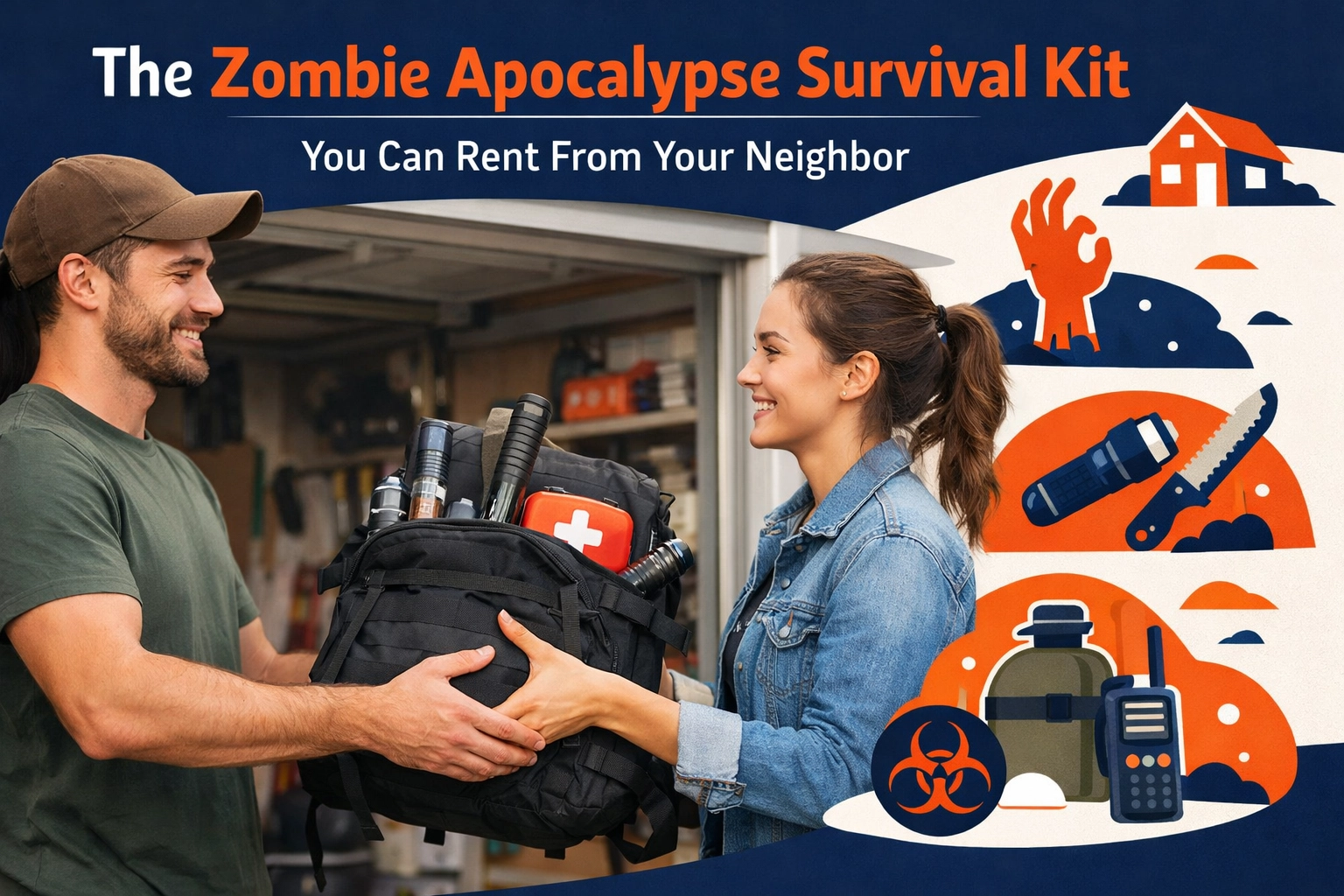
Look, we need to talk about the elephant in the room, or should I say, the zombie horde at your doorstep. When the apocalypse hits (and by apocalypse, I mean that Category 3 hurricane, the week-long power outage, or the "I just bought a house and realized I own zero tools" crisis), are you really ready?
Spoiler alert: Most of us aren't. But here's the plot twist, your neighbor probably is, and they don't even know it yet.
We're All Secretly Preppers (Sort Of)
Here's a fun fact: According to recent surveys, nearly 70% of Americans believe they're unprepared for a natural disaster. But walk into any suburban garage, urban storage closet, or basement, and you'll find enough survival gear to outlast most post-apocalyptic scenarios. The problem? It's all scattered across different households, collecting dust 99.9% of the time.
Your neighbor Dave has a generator he uses once every two years. Sarah down the hall has a camping stove that's seen three camping trips in five years. And Mike upstairs? He's got a full toolkit that could rebuild civilization, but it mostly just makes him feel handy when guests come over.
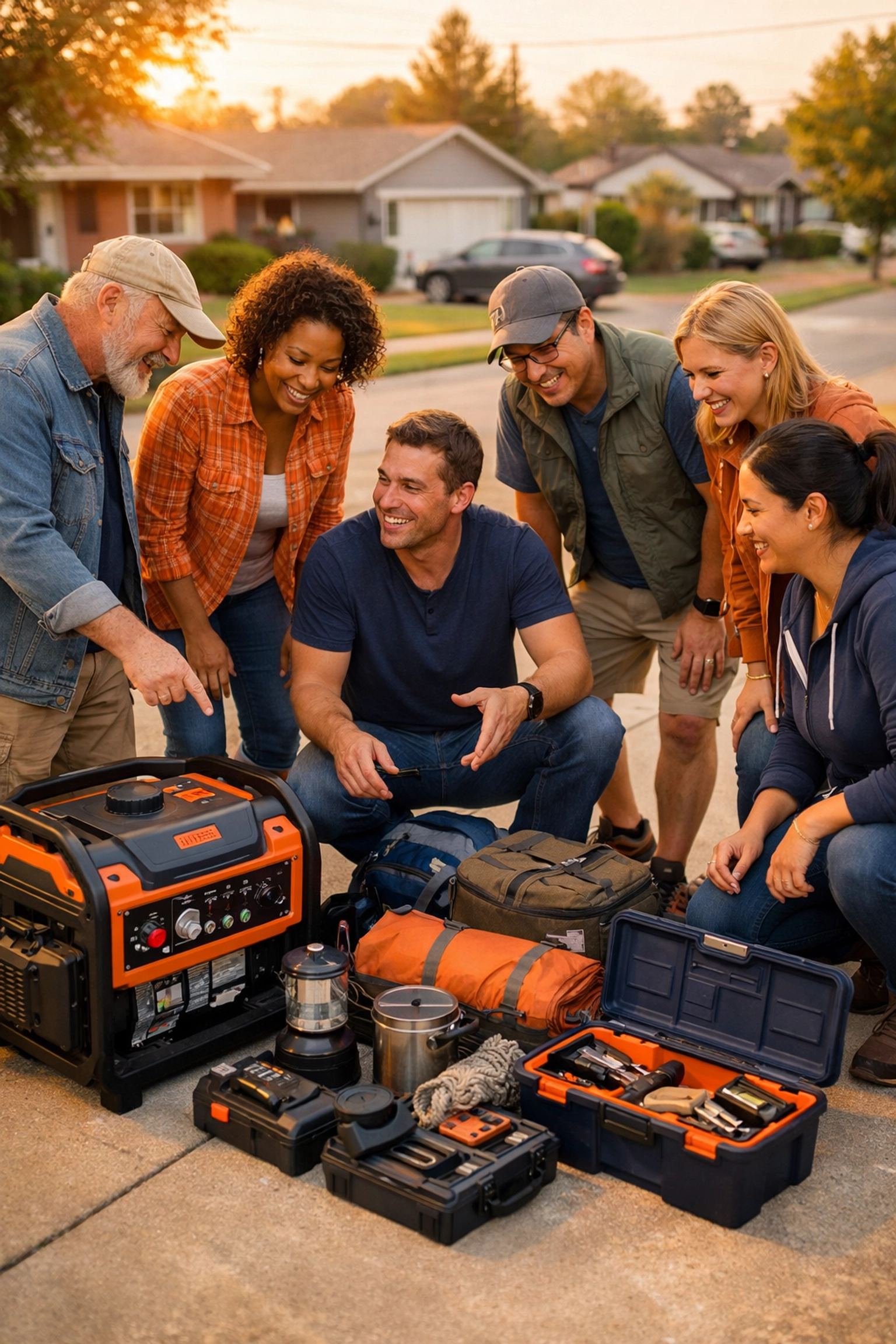
We've become accidental preppers, buying gear "just in case," storing it "somewhere safe," and forgetting about it until the actual zombie apocalypse arrives, or you know, when the power goes out during your big work presentation.
The Storage Space Struggle Is Real
Let's get real about apartment living for a second. You're supposed to fit your entire life into 700 square feet, including a work-from-home setup, a hobby corner, and apparently, an entire survival bunker's worth of emergency gear? The math simply doesn't math.
Even if you've got a house with a garage, do you really want to dedicate prime real estate to equipment you'll use once in a blue moon? That generator takes up the space where your bike could go. Those industrial-strength flashlights are occupying valuable shelf space. And don't even get me started on the camping gear that's been "temporarily" stored since 2019.
The traditional approach to emergency preparedness is basically: own everything, store everything, forget where you put everything, panic when you actually need it, realize the batteries died three years ago.
There has to be a better way, right?
Your Neighbor's Garage: The Community Survival Cache
Here's where things get interesting. What if I told you that within a three-block radius of your home, there's enough emergency equipment to keep your entire neighborhood running through any crisis? The only problem is that it's all locked away in individual garages, sheds, and closets, waiting for emergencies that rarely come.
Enter the sharing economy's coolest application yet: renting survival gear from your neighbors. Think of it as community preparedness meets the convenience of not owning seventeen things you'll use once.
The Heavy Hitters: Power and Light
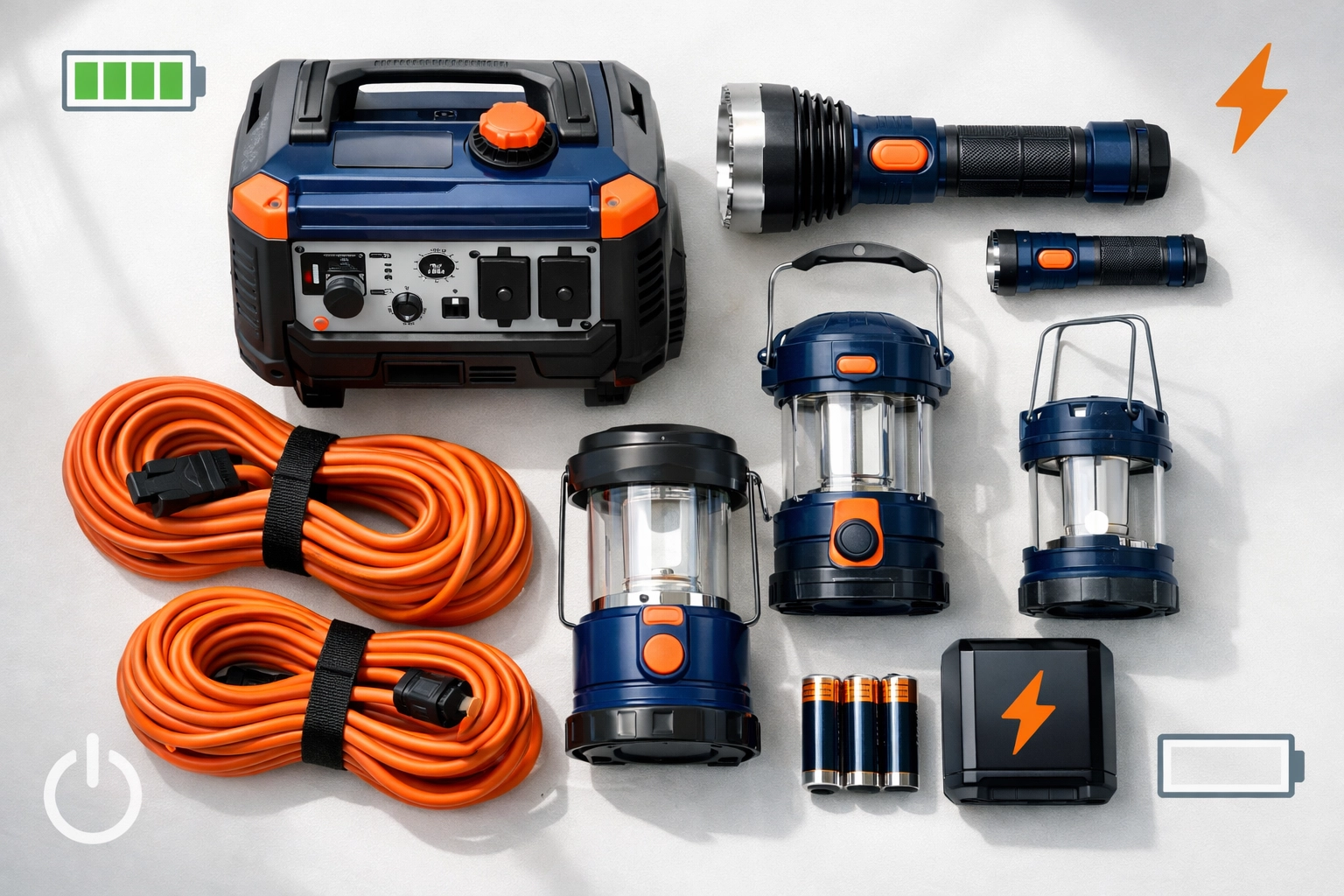
Generators are the holy grail of apocalypse gear. They're also expensive, require maintenance, need fuel, and take up serious space. But guess what? Somebody on your street already owns one. Instead of dropping $800+ on your own, rent one when Hurricane Whatever-Its-Name-Is is heading your way.
High-powered flashlights and lanterns are another essential. Sure, you've got that sad little phone flashlight, but when the power's been out for three days, you'll want something with actual lumens. Your neighbors have these tucked away in emergency kits, and they're just sitting there, waiting to shine.
Cooking Without Power (Because Humans Need Coffee)
Camping stoves are the MVPs of power outages. They'll keep you caffeinated during crises, which is arguably more important than actual survival. These compact cookers are perfect for renters: you don't need to own one for those twice-a-decade events when the electricity decides to take a vacation.
Propane heaters fall into the same category. Nobody wants to buy a $200 heater they'll use twice in their lifetime, but everyone wants to be warm when the heating system fails during a polar vortex.
Tools: For When Survival Gets Hands-On
Here's a truth bomb: most DIY emergencies feel like mini apocalypses. Your burst pipe doesn't care that you don't own a pipe wrench. That tree branch through your window isn't going to wait for you to go buy a chainsaw.
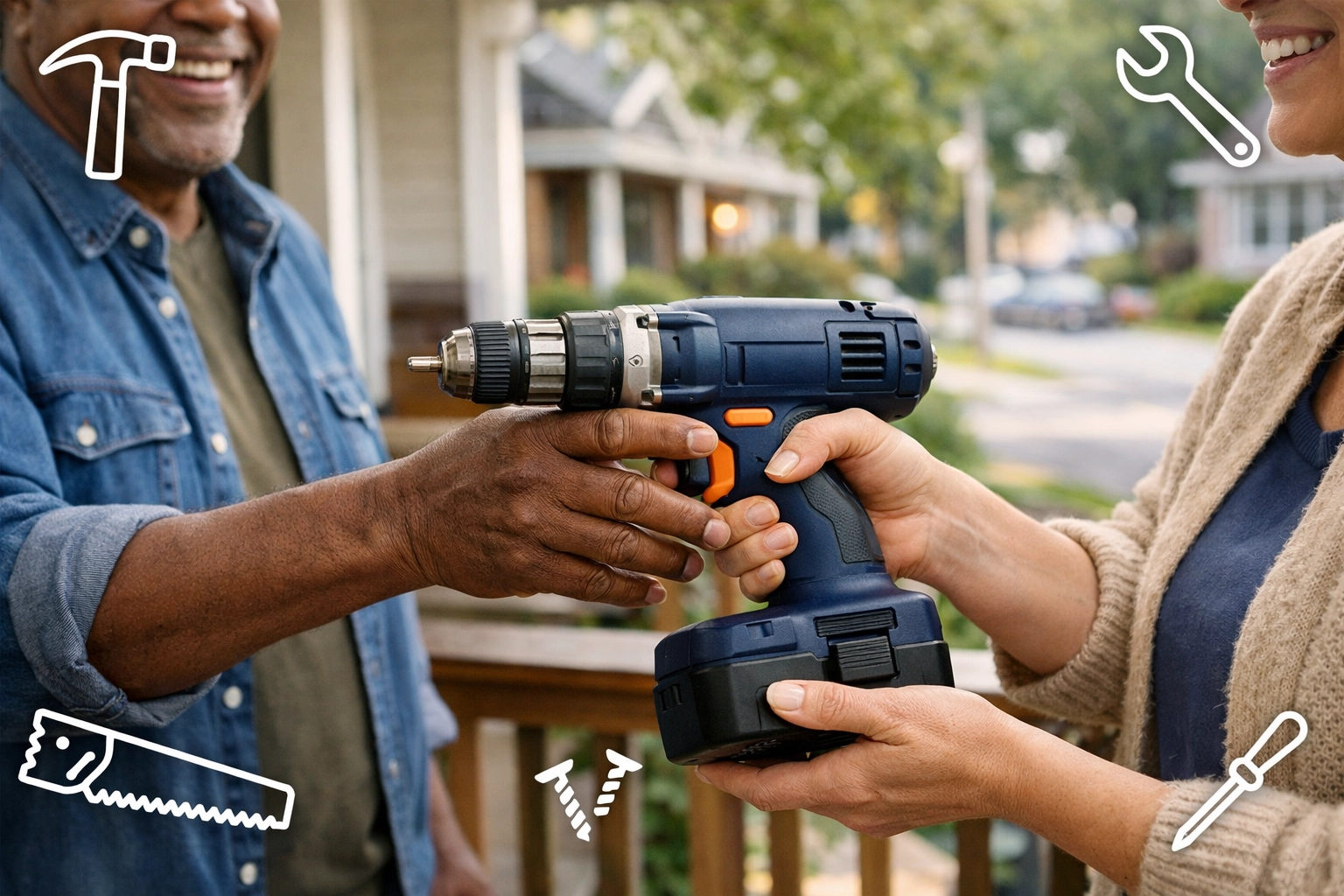
Heavy-duty toolkits, power drills, saws, and ladders: these are the items that transform you from helpless disaster victim to capable problem-solver. And the beautiful part? Someone within walking distance already has them.
Water and Sanitation Solutions
Water purification systems and portable water containers become liquid gold (pun intended) during emergencies. These items are expensive to buy but invaluable to have access to when you need them.
Portable toilets and camping sanitation supplies might not be glamorous, but three days into a water main break, you'll understand why they make the list.

Community Preparedness: The Real Survival Strategy
Here's what makes this approach brilliant: it's not just about saving money or storage space (though those are fantastic bonuses). It's about building a community that's genuinely prepared because resources are shared, accessible, and actually available when needed.
When you rent a generator from Tom three doors down, you're not just solving your power problem: you're creating a connection. You're learning who has what, building relationships, and creating a network of people who'll have each other's backs when things go sideways.
Traditional prepping can be isolating. You stock up, lock down, and hope you'll never need to share. But community-based preparedness through sharing platforms like Chartrflex flips that script entirely. Suddenly, your neighborhood isn't a collection of isolated households: it's a resource-sharing network where everyone's more prepared because they're prepared together.
How to Be Ready Without Becoming a Hoarder
The beauty of this rental approach is that you can be completely prepared without turning your home into a warehouse. Here's your action plan:
First, take inventory. What do you actually own that could help during an emergency? That camping gear, those extra batteries, that portable speaker you haven't touched in months: these all have value when crisis hits.
Second, scope out your community. Browse your local Chartrflex listings. You'll be amazed at what's available within your neighborhood. It's like a treasure hunt, except the treasure is a chainsaw you can rent for $25 a day.
Third, list your own gear. That generator you use once every two years? It could be earning you money while helping your neighbors stay prepared. Win-win.
Finally, build relationships. Chat with the folks you rent from. Exchange tips. Learn about other resources in your area. The zombie apocalypse: sorry, the next big storm: is way less scary when you know your neighbors have your back.
Ready for Anything (Without the Storage Unit)
Look, we're probably not facing an actual zombie apocalypse anytime soon (knock on wood). But we are facing hurricanes, blizzards, heat waves, power outages, and those random DIY emergencies that strike at the worst possible moments.
The old way of preparing: buying everything, storing everything, letting everything collect dust: doesn't work for most of us. But tapping into your community's collective resources? That's practical, affordable, and actually sustainable.
Plus, there's something oddly comforting about knowing that Dave down the street has a generator, Sarah has a camping stove, and Mike has enough tools to rebuild civilization if needed. You're not alone in this. Your neighborhood is a survival kit, and everyone's contributing to the collective preparedness.
So download the Chartrflex app and start exploring what your neighbors have hiding in their garages. Build your community's resilience. And the next time a "zombie apocalypse" hits: whether it's a storm, a power outage, or a sudden need to hang forty picture frames: you'll be ready.
Because the best survival strategy isn't hoarding gear in your apartment. It's knowing your neighbors have what you need, and you have what they need. That's how we all survive the apocalypse, together.
Warm regards,
The Chartrflex Team


Like (0)