



What if the key to building stronger communities wasn’t about having more: but about sharing what we already have?
In an era where garages overflow with rarely-used equipment and storage units multiply across suburbia, one entrepreneur is challenging everything we thought we knew about ownership. Josiah Kavuma, the visionary CEO of Chartrflex, isn’t just building a peer-to-peer rental platform. He’s architecting a movement that could fundamentally reshape how neighbors connect, resources circulate, and communities thrive.
We sat down with Josiah at Chartrflex’s headquarters in Burlington, Massachusetts, for an in-depth conversation about the future of the sharing economy, the hidden potential in every neighborhood, and why he believes the next decade will transform how we think about “mine” versus “ours.”
The Path to Purpose
You’ve had quite a journey: from Cloud Engineering to Healthcare Innovation to now leading a sharing economy platform. What’s the thread that connects it all?
Josiah Kavuma: At the core, it’s always been about access. When I co-founded Matibabu, our non-invasive malaria diagnostic device, we were solving an access problem: millions of people couldn’t get to diagnostic facilities. With WinSenga, our fetal heart rate monitor, we were bringing maternal healthcare to communities that had been overlooked.
Chartrflex is the same philosophy applied differently. In America, we don’t have a scarcity problem: we have a distribution problem. There’s a $3,000 pressure washer sitting in someone’s garage three streets over from a family who can’t afford to rent one commercially. That’s not just inefficient. It’s a missed connection.
So Chartrflex is about more than just renting tools?
Josiah: Absolutely. Every transaction on our platform is a handshake between neighbors. It’s a conversation starter. It’s someone learning that the person down the block also loves woodworking, or that their neighbor has a camping setup they’d be happy to share for the weekend.
We’re not competing with hardware stores. We’re competing with isolation. And honestly? Isolation doesn’t stand a chance.
Redefining Ownership for a New Generation
There’s been a lot of talk about younger generations rejecting traditional ownership. Do you see that playing out?
Josiah: I see something more nuanced. It’s not that people don’t want to own things: it’s that they’re questioning why they should own things they rarely use. The average power drill gets used for 13 minutes in its entire lifetime. Thirteen minutes! And yet it sits in a drawer for years, depreciating, taking up space.
What we’re witnessing is a shift from ownership as identity to ownership as utility. People are asking smarter questions: Do I need to own this, or do I need access to this?
And Chartrflex provides that access.
Josiah: We provide more than access: we provide connection with purpose. When you rent a kayak from your neighbor for a Saturday adventure, you’re not just saving money. You’re participating in a circular economy. You’re reducing demand for new manufacturing. You’re meeting someone in your community. That’s three wins from one transaction.

The Community-First Philosophy
Community seems central to the Chartrflex mission. Can you talk about that?
Josiah: Growing up, I saw how communities in Uganda operated: there was an inherent understanding that resources were shared, that neighbors supported neighbors. When I came to the United States, I noticed something different. People had more stuff but fewer connections.
I kept asking myself: what if technology could rebuild those bridges? What if we could use the tools of the digital age to recreate the village mentality?
That’s Chartrflex. We’re not disrupting community: we’re restoring it, one rental at a time.
How do you measure that kind of success?
Josiah: Beyond the metrics: and yes, we track transactions and user growth: we look at repeat interactions. When someone rents from the same neighbor multiple times, that tells us something beautiful is happening. Relationships are forming. Trust is building.
We’ve had users tell us they’ve made genuine friendships through the platform. One woman in Boston told us she met her book club through Chartrflex after renting a pressure washer. That’s not something you can put on a balance sheet, but it’s exactly what we’re building toward.
Sustainability as a Side Effect
Let’s talk about the environmental angle. How does Chartrflex contribute to sustainability?
Josiah: Here’s what I love about our model: sustainability isn’t the selling point: it’s the inevitable outcome. When fewer people need to buy new equipment because they can borrow from neighbors, we reduce manufacturing demand. We decrease shipping. We keep items out of landfills longer.
The EPA estimates that if Americans extended the life of their products by just nine months, we’d save 400,000 tons of waste annually. Chartrflex makes that extension effortless.
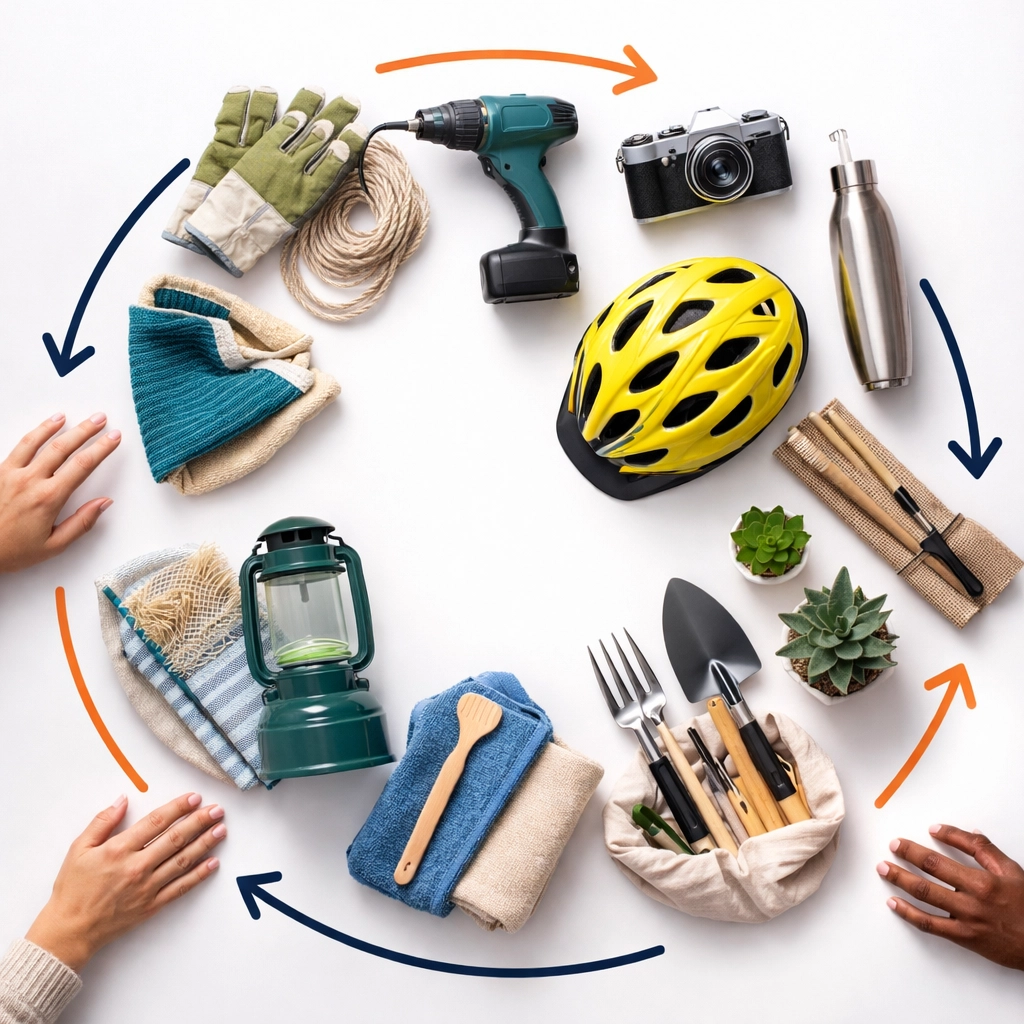
So users can feel good about participating, even if their primary motivation is saving money?
Josiah: Exactly. We don’t require anyone to be an environmentalist to use Chartrflex. Save money? Great. Meet your neighbors? Wonderful. Reduce your carbon footprint? That happens automatically. We’ve designed a system where doing good is the path of least resistance.
Looking Ahead: The Next Five Years
Where do you see Chartrflex in five years?
Josiah: I see us in every neighborhood in America: and beyond. I see a world where “borrowing from a neighbor” is the default before “buying new” even enters the conversation.
More importantly, I see stronger communities. I see block parties that started because two strangers met through our platform. I see local economies thriving because money circulates within neighborhoods instead of flowing to distant corporations.
That’s ambitious.
Josiah: It has to be. The problems we’re solving: isolation, overconsumption, environmental strain: they’re ambitious problems. They require ambitious solutions and an even more ambitious community willing to build something different together.
Any advice for aspiring entrepreneurs who want to create mission-driven companies?
Josiah: Start with the problem you can’t stop thinking about. For me, it was always access and connection. Build something that solves a real human need, and let the business model follow.
And remember: your early users aren’t just customers. They’re co-creators. Listen to them. They’ll tell you things no business plan ever could.
Join the Movement
As our conversation wrapped up, Josiah‘s passion was palpable. This isn’t a CEO going through the motions: it’s a leader genuinely energized by the community he’s building.
For those ready to be part of this vision, the invitation is simple: Download the Chartrflex app and see what your neighbors have to share. Or better yet, list something you own but rarely use. That camera equipment gathering dust. The camping gear from last summer. The tools you inherited but haven’t touched.
Every listing is a door opening. Every rental is a connection waiting to happen.
The future of ownership isn’t about having more. It’s about sharing better: together.
Want to learn more about Chartrflex? Visit our About page or connect with us directly via phone at
+1 617 440 9186
Warm regards,
The Chartrflex Team


Like (7)