



Hey everyone! Josiah here.
I've been thinking a lot lately about this weird juggling act that every startup founder goes through: constantly switching between being the visionary founder and the operational CEO. Some days I'm sketching out wild product ideas on whiteboards, and other days I'm deep in spreadsheets figuring out user acquisition costs. It's honestly exhausting, but also kind of exciting.
Building Chartrflex has taught me that these aren't just different job titles: they're completely different mindsets. And knowing when to wear which hat can literally make or break your startup.
The Founder Hat: Dreams, Vision, and Late-Night Epiphanies
When I put on my founder hat, I'm thinking big picture. Really big picture.
As Chartrflex's founder, I'm the guy who wakes up at 2 AM with a crazy idea about how our chart visualization could work differently. I'm constantly asking "what if?" and "why not?" I'm the one who gets irrationally excited about solving problems that most people didn't even know existed.
The founder side of me is always pushing boundaries. When we first started Chartrflex, I spent weeks obsessing over a single user interface element because I knew it could be the difference between someone loving our product or just tolerating it. That's founder thinking: sweating the details because you genuinely believe your solution can change how people work with data.

But here's the thing about founder mode: it's not always practical. Founders take risks that would make any sane CEO nervous. We pivot based on gut feelings. We chase shiny objects. We invest time and resources in features that might never see the light of day because they feel right.
That's not necessarily bad: innovation requires some level of controlled chaos. But it's not sustainable as your only operating mode.
The CEO Hat: Systems, People, and Making Things Actually Happen
Now, when I switch to CEO mode, everything changes. Suddenly, I'm not just dreaming about what Chartrflex could become: I'm focused on what it needs to be today, tomorrow, and next quarter.
As CEO, I'm thinking about our team structure. Are we hiring the right people? Is everyone aligned on our priorities? How are we measuring success, and are we actually hitting our targets? When I'm in CEO mode, I'm the person making sure our brilliant founder ideas actually translate into a product people want to buy.
This means a lot of unglamorous work. I'm reviewing conversion metrics, analyzing user feedback, and making tough decisions about resource allocation. If the founder in me wants to build ten new features, the CEO has to figure out which three we can actually execute well.
The CEO side is also responsible for the stuff that keeps me up at night for different reasons than founder excitement. Cash flow projections. Team performance reviews. Competitive analysis. Making sure we're not just building cool stuff, but building a sustainable business.
The Daily Dance: Switching Hats at Chartrflex
Here's where it gets interesting: and honestly, where I've made my biggest mistakes. You can't just pick one hat and stick with it. The magic happens when you know which one to wear when.
Let me give you a real example from our Chartrflex journey. Last year, we were struggling with user engagement. People would sign up, try our basic chart features, and then just… disappear. Classic startup problem, right?
Founder mode said: "Let's build something completely revolutionary! What if we created AI-powered chart suggestions that predict what users want before they even know it?"
CEO mode said: "Hold up. Let's first figure out why people are leaving. What's the actual friction point? Maybe it's not about more features: maybe it's about making our existing features more discoverable."
Guess which approach worked? We spent two weeks doing user interviews (CEO thinking) and discovered that people loved our advanced features but couldn't find them. A simple onboarding flow redesign increased our retention by 40%.
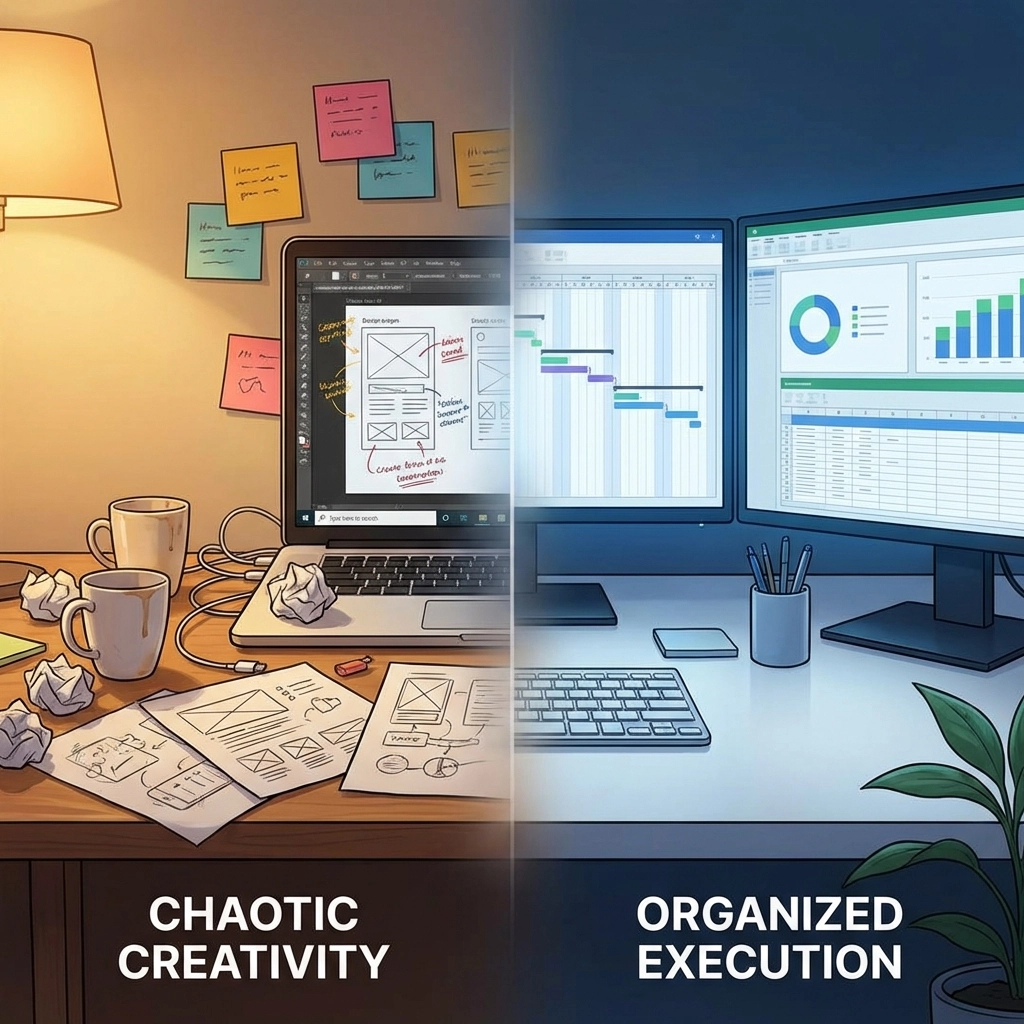
The founder in me wanted to build something sexy and new. The CEO made sure we solved the real problem first.
Execution, Visibility, and Growth: Where Both Hats Matter
At Chartrflex, our three big priorities are execution, visibility, and user growth. And honestly, each one requires a different balance of founder versus CEO thinking.
For execution: CEO mode is king. This is about systems, processes, and making sure stuff actually ships. The founder might have brilliant ideas about data visualization, but the CEO needs to make sure our development team has clear priorities and realistic timelines.
For visibility: This is where I've learned to blend both hats. The founder passion helps me tell compelling stories about why Chartrflex matters. But the CEO discipline ensures we're targeting the right audiences and measuring our marketing effectiveness.
For user growth: Pure founder mode can lead to building features nobody asked for. Pure CEO mode might optimize for numbers without understanding user needs. The sweet spot is using founder intuition to identify growth opportunities, then applying CEO rigor to test and scale them.
The Uncomfortable Truth About Role Switching
Here's what nobody tells you: switching between founder and CEO mindsets is emotionally exhausting. They require completely different personality traits.
Founders need to be optimistic to the point of delusion. We have to believe our crazy ideas will work when everyone else thinks we're nuts. CEOs need to be realistic, sometimes brutally so. We have to make hard decisions based on data, not dreams.
Some days, I feel like I'm having arguments with myself. The founder wants to chase an exciting new market opportunity. The CEO knows we need to focus on improving our core product first. Both perspectives are valid, but they pull in opposite directions.

The key is learning to compartmentalize. When I'm in product development meetings, I try to lead with founder energy: asking wild questions and pushing creative boundaries. When I'm looking at our monthly metrics review, I switch to CEO mode: focusing on what the data tells us and what actions we need to take.
Practical Lessons from the Chartrflex Journey
After building Chartrflex for the past few years, here's what I've learned about managing the founder-CEO duality:
Time-block your roles. I literally schedule "founder time" and "CEO time" on my calendar. Founder time is for product vision, user research, and strategic thinking. CEO time is for operations, team management, and performance analysis.
Build systems that support both. We use tools that help me toggle between modes. Our product roadmap keeps the founder vision visible while our OKR system keeps CEO priorities clear.
Know your bias. I'm naturally more founder than CEO, which means I have to deliberately force myself into operational thinking. If you're the opposite: naturally more operational: you might need to schedule more time for big-picture vision work.
Don't try to be perfect at both. Early on, I exhausted myself trying to be the world's best founder AND the world's best CEO. That's impossible. Focus on being good enough at both while knowing which one needs to be stronger at different stages of your company's growth.
Looking Forward: The Evolution Continues
As Chartrflex grows, I'm constantly reevaluating this balance. Some founders eventually hire CEOs to handle operations. Others lean fully into the CEO role and bring in Chief Product Officers to maintain the founder vision.
Right now, I'm still doing both, but I'm more intentional about it. I've learned that being a good founder-CEO isn't about being equally strong in both roles: it's about knowing when each role is needed most.
The founder hat got Chartrflex started. The CEO hat is helping us scale. And honestly? I think I'll be switching between them for as long as I'm building this company.
The question isn't whether you should be a founder or a CEO. It's whether you can learn to be both when your startup needs you to be.
What's your experience been like? Are you naturally more founder or CEO? I'd love to hear how other builders are navigating this balance.


Like (2)